Your Brain Has a Spam Filter. Can We Reverse-Engineer It?
Inside the math that could protect your mind from neural hackers.
**Here’s something that should keep you up at night:**When a neural implant sends a signal to your brain, your neurons can’t tell the difference between that signal and one they generated themselves.
If the timing is right, the amplitude is right, and the frequency is right — your brain just… accepts it. No verification. No authentication. No “are you sure you want to allow this app to control your motor cortex?”
Evolution never anticipated signals arriving from silicon.
This is incredible when it helps a paralyzed patient move a cursor with their thoughts.
It can be terrifying when you realize the same mechanism could let an attacker inject commands directly into your nervous system.
But Your Brain Isn’t Completely Defenseless
Here’s what’s fascinating: your brain actually does have a quality filter. It’s just not designed for security — it’s designed for signal integrity.
Every millisecond, your neurons are making decisions about which signals to trust and which to ignore. A spike that arrives at the wrong time gets filtered out. A signal that’s too weak doesn’t propagate. One that’s too strong triggers protective mechanisms.
Your brain has been solving the “which signals are real?” problem for 500 million years. It just never had to solve it adversarially.
The question I’ve been obsessively pondering —
Can we formalize what the brain already knows? Can we turn its implicit quality filter into an explicit security check?
Introducing the Coherence Metric
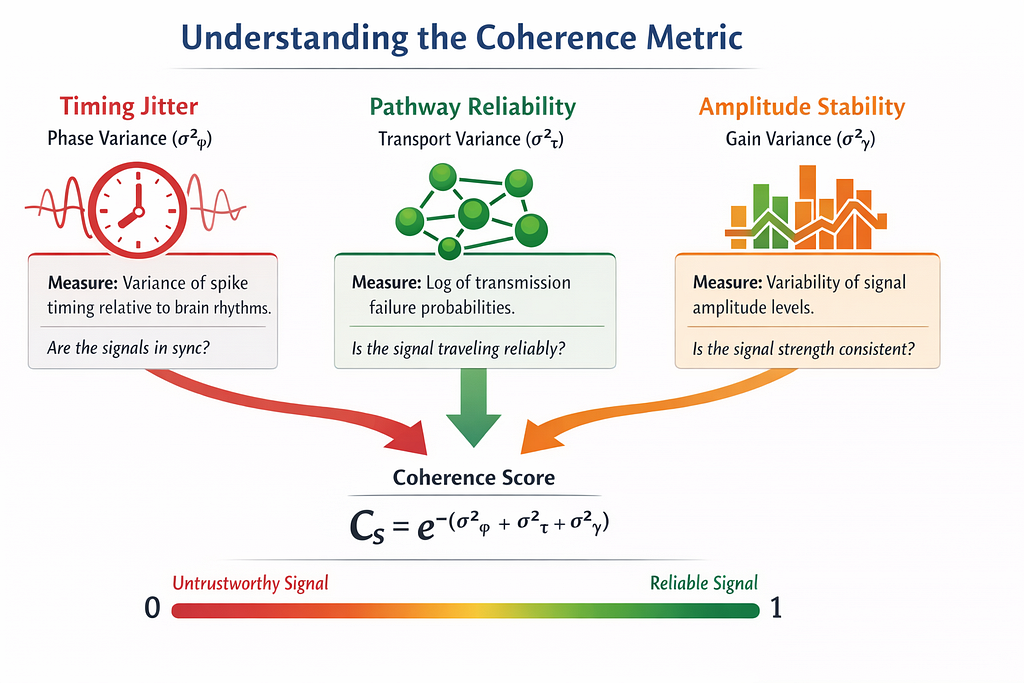
I’ve been developing the following mathematical framework that attempts to quantify signal-efficacy, or signal “trustworthiness”, across three dimensions:
- Timing (Phase, σ²φ). Your neurons communicate through precisely timed oscillations — brain waves. Gamma rhythms pulse 30–100 times per second, and signals need to arrive at exactly the right phase to be processed. Miss the window by a few milliseconds and your brain’s own gating mechanisms reject the signal. Random-phase attacks fail naturally.
- Pathway Integrity (Transport, σ²τ). Biological signals degrade as they travel through axons, across synapses, through dendrites. Each hop introduces a little noise, a little uncertainty. A signal that arrives too “clean” — with suspiciously low noise — might actually be a red flag. It bypassed the normal biological pathway.
- Amplitude (Gain, σ²γ).Too weak and a signal won’t trigger downstream neurons. Too strong and it can cause damage — excitotoxicity, receptor saturation, tissue harm. Your brain maintains homeostatic balance through mechanisms we’re only beginning to understand. Signals outside the expected amplitude range get flagged.
One Equation, Three Dimensions
Combine these three factors and you get what I call the Coherence Metric:
Cₛ = e^(−(σ²ᵩ + σ²τ + σ²ᵧ))
It’s simpler than it appears!
Let’s break this formula down into the aforementioned 3 dimensions to help us calculate signal efficacy by quantifying using a Coherence score:
Cₛ is the Coherence score (ranges from 0 to 1), measuring how “trustworthy” a neural signal is. When a signal has perfect timing, perfect pathway integrity, and perfect amplitude — coherence equals 1. Full trust.
As any of those factors degrade — timing jitter, transmission noise, amplitude fluctuation — coherence drops toward zero. Increasing suspicion.
The exponential decay isn’t arbitrary. Neural systems exhibit threshold behaviors. A signal doesn’t gradually become “less trusted” — it either crosses the threshold for propagation or it doesn’t. The math captures that biological reality.
Wait, What Does This Even Mean?
Let’s try to use some shared vocabulary to help us better understand this equation.
tl;dr —
- Timing (σ²φ) Measures spike timing jitter relative to reference oscillations. High phase variance = signals arrive out of sync.
- Transport (σ²τ) Measures signal reliability across the pathway (axons, synapses). High transport variance = transmission errors or dropouts.
- Amplitude (σ²γ) Measures stability of signal amplitude. High gain variance = deviations from expected strength.
Now, let’s simplify this further and ELI5:
- φ (phi) → phase → timing
- τ (tau) → transport → pathway integrity
- γ (gamma) → gain → amplitude
Given these variables, we can calculate the Coherence score (Cₛ) as:
Cₛ = e^-(Timing + Pathway + Amplitude)Where we then apply the negative exponent: e^-(total variance) which converts variance into a coherence score between 0 and 1.
- Low total variance → Cₛ ≈ 1 → very coherent
- High total variance → Cₛ → 0 → untrustworthy signal
An exponential decay is used because accumulated uncertainty reduces signal trust multiplicatively, consistent with Gaussian noise models and maximum-likelihood signal estimation.
Pseudocode
For the Computer Science folks — If you’re following along, the Coherence Metric can be thought of like a signal validation function. Here’s how it works:
Step 1: Input → What we measure
- phase_variance (σ²φ) → Timing jitter of the signal
- transport_variance (σ²τ) → Reliability of the pathway
- gain_variance (σ²γ) → Amplitude stability
Add them together:
total_variance = phase_variance + transport_variance + gain_varianceStep 2: Convert to a normalized score
The coherence score translates total uncertainty into a number between 0 and 1:
coherence_score = exp(-total_variance) # higher = more trustworthy- Cₛ ≈ 1 → Very coherent, signal is reliable
- Cₛ → 0 → Very noisy or untrustworthy signal
Step 3: Decision logic
Think of it like a signal filter:
def check_signal(signal):
    if signal.is_on_time() and signal.path_is_reliable() and signal.is_strong():
        return "Trusted"
    else:
        return "Warning/Reject"
Or tied directly to Cₛ:
if coherence_score > 0.6:
    if authenticated_signal:
        action = "ACCEPT"
    else:
        action = "REJECT + ALERT"
elif 0.3 < coherence_score <= 0.6:
    if authenticated_signal:
        action = "ACCEPT + FLAG"
    else:
        action = "REJECT + ALERT"
else:
    action = "REJECT + CRITICAL ALERT"
print("Coherence Score:", coherence_score)
print("Action:", action)In plain CS terms
Cₛ is a trust meter*. Each variance component adds “risk points.” The higher the total, the lower the trust score. The* if/then logic filters signals based on their trustworthiness*.*
If:
- Input variables → σ²φ, σ²τ, σ²γ represent uncertainties.
- total_variance → sum of uncertainties.
- coherence_score → converts uncertainty into a normalized trust score (0–1).
Then:
def check_signal(signal):
if signal.is_on_time() and signal.path_is_reliable() and signal.is_strong():
return "Trusted"
else:
return "Warning/Reject"Or:
# Coherence Metric Pseudo-Code
# Compute trustworthiness of a neural signal
# Input variances (example values)
phase_variance = σ_phi_squared # Timing jitter
transport_variance = σ_tau_squared # Pathway reliability
gain_variance = σ_gamma_squared # Amplitude stability
# Total uncertainty
total_variance = phase_variance + transport_variance + gain_variance
# Coherence score calculation
coherence_score = exp(-total_variance) # e^-(total variance)
# Decision logic based on coherence score
if coherence_score > 0.6:
if authenticated_signal:
action = "ACCEPT"
else:
action = "REJECT + ALERT"
elif 0.3 < coherence_score <= 0.6:
if authenticated_signal:
action = "ACCEPT + FLAG"
else:
action = "REJECT + ALERT"
else: # coherence_score <= 0.3
action = "REJECT + CRITICAL ALERT"
# Output
print("Coherence Score:", coherence_score)
print("Action:", action)How Are These Dimensions Measured?
Now, let’s break each input down even further…
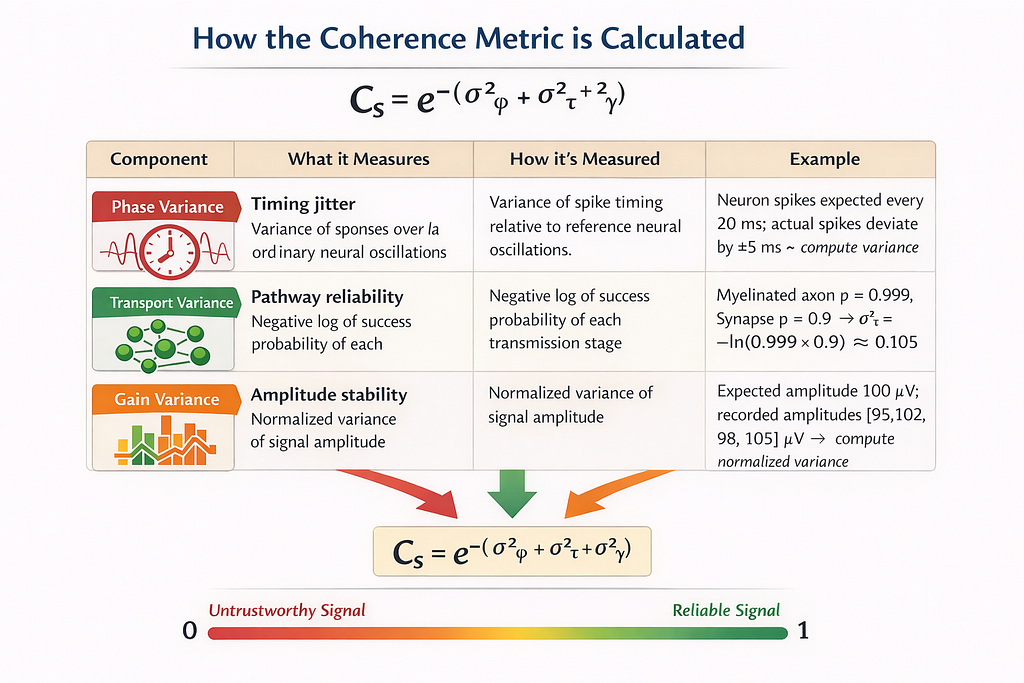
1. Phase (σ²φ)
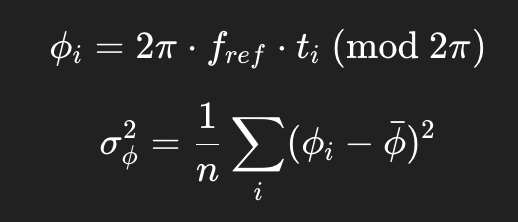
Phase Variance (Timing Jitter)
- What it measures: How “on time” the spikes are relative to a reference neural rhythm.
- Why it matters: Neural populations communicate best when spikes are synchronized. Misaligned spikes may be ignored.
2. Transport (σ²τ)
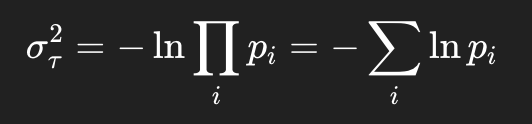
Transport Variance (Pathway Integrity/Reliability)
- What it measures: How reliably the signal travels from electrode to neurons.
- Why it matters: Biological pathways can fail (axon conduction, synaptic release). Low reliability increases uncertainty.
3. Gain (σ²γ)
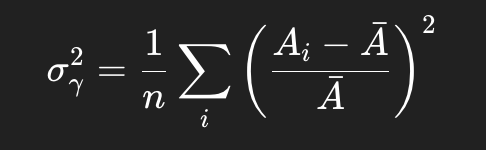
Gain Variance (Aplitude Stability)
- What it measures: How consistent the signal strength is relative to expected amplitude.
- Why it matters: Signals that are too weak or too strong may fail to trigger the intended neural response.
“If a microphone’s volume is too soft or too loud, the audience can’t interpret it properly.”
Why This Matters for Brain-Computer Interfaces
Imagine a Neural Firewall— a security layer that sits between the digital world and your neural tissue, inspecting every signal in both directions.
For incoming commands, it asks: Does this signal’s coherence score fall within biological norms? Is the timing aligned with ongoing brain rhythms? Is the amplitude within safe bounds?
If any check fails: reject, log, alert.
For outgoing signals, it asks: Is this normal neural activity or something anomalous? Should we strip sensitive information before transmission? Is everything encrypted before it hits Bluetooth?
The hard part: this firewall has to run on a chip that draws less power than a hearing aid. A leading neural implant runs on 25 milliwatts — that’s nothing. The security layer gets maybe 3–5 milliwatts to work with.
But here’s the thing — the coherence calculation is surprisingly efficient. You’re not analyzing raw signals; you’re tracking statistics. Means and variances. A few hundred microseconds of latency. It’s doable.
The Catch
This framework isn’t bulletproof. A sophisticated attacker with read access to your brain’s electrical activity could potentially synchronize their malicious signals to your ongoing rhythms — achieving high coherence while still being harmful.
The metric detects abnormal signals. It doesn’t guarantee detection of all malicious ones.
It’s also not empirically validated. The math is grounded in neuroscience literature, but we need experiments — animal studies, clinical correlations — to prove these metrics actually predict what the brain accepts versus rejects.
But here’s why I’m publishing anyway: we need shared vocabulary.
Before we can defend bio-digital interfaces, we need to be able to talk about what we’re defending. What’s the coherence threshold? Which variance component is most vulnerable? How do we detect phase-synchronized attacks?
These are the questions we should be asking now — before brain-computer interfaces are in millions of heads.
Part of Something Larger
The coherence metric is one piece of a larger framework I’ve been developing. The goal isn’t to solve everything. It’s to create a scaffold that neuroscientists, security engineers, and ethicists can stress-test, criticize, and improve.
Your Brain Has a Spam Filter. Can We Reverse-Engineer It? was originally published in Cyber Security Write-ups on Medium, where people are continuing the conversation by highlighting and responding to this story.
Written with AI assistance (Claude). All claims verified by the author.